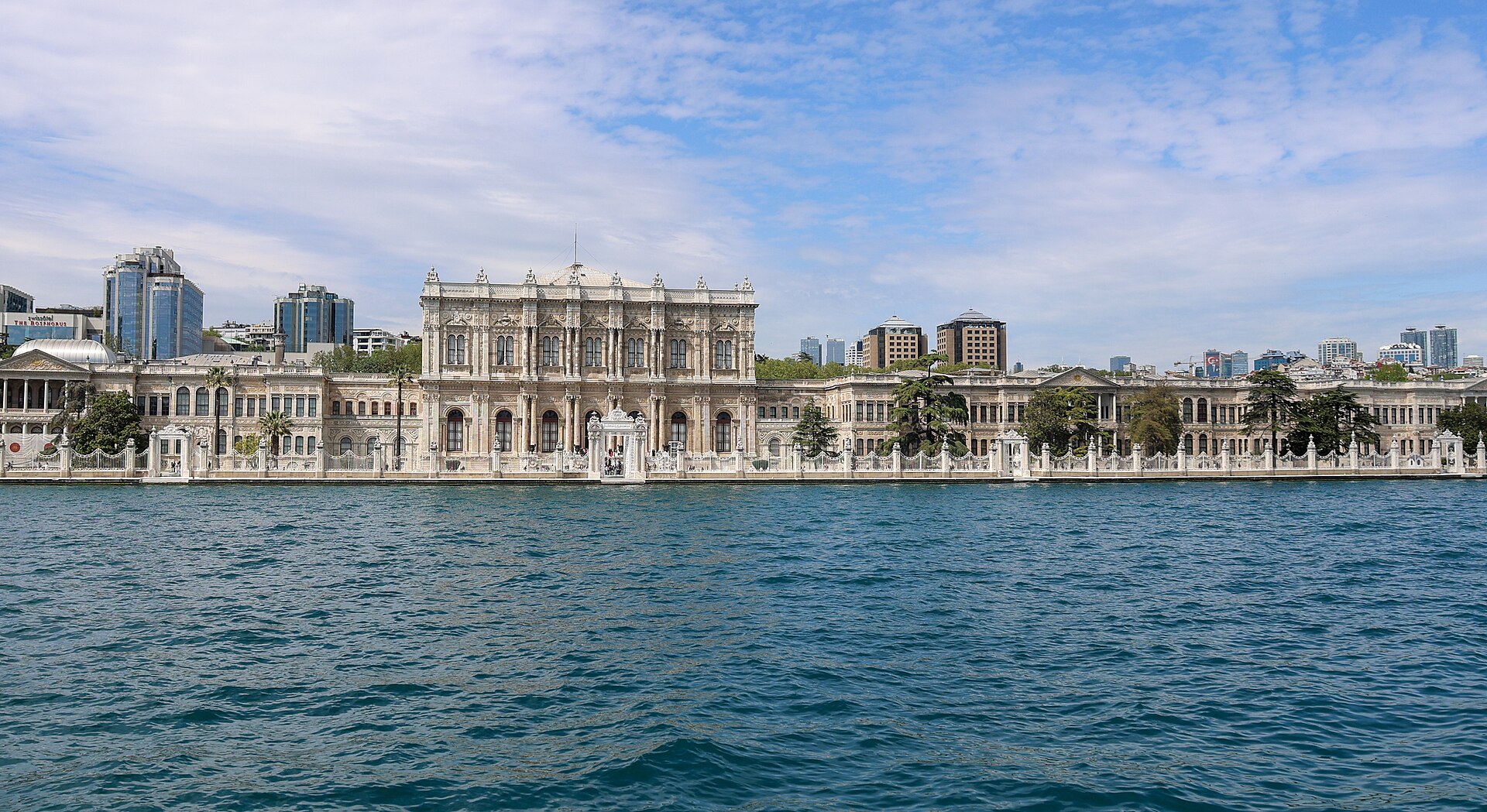
Dolmabahçe Palace
A 19th-century baroque palace stretching 600m along the Bosphorus — where the Ottoman Empire ended, with the world's largest Bohemian crystal chandelier.
About
Dolmabahçe Palace (Dolmabahçe Sarayı) was the Sultan's primary residence from 1856 to 1922, replacing Topkapı as the center of imperial power. It was commissioned by Sultan Abdülmecid I, who felt Topkapı had become inadequate to the modern diplomatic requirements of a 19th-century empire (visiting European heads of state expected staterooms with running water and gas lighting, which Topkapı famously did not have).
The result is the largest single-chamber palace in the world — the Ceremonial Hall with its 4.5-tonne Bohemian crystal chandelier (a gift from Queen Victoria), 36m ceilings, and a 1,500 sq.m. carpet, all under a single dome. The whole palace has 285 rooms, 46 halls, 6 baths, and 68 toilets (a Turkish diplomatic gift to the British, who thought it excessive). European baroque meets Ottoman Rococo throughout, in gilt bronze and crystal.
The palace's most poignant room is the bedroom where Mustafa Kemal Atatürk died on 10 November 1938, on the same morning that the 9th-century clock on the mantle — broken at 9:05 — was rewound to start again. The clock still shows 9:05 today.
Allow 2-3 hours. ~30 EUR (or combo with Harem + clock tower). Closed Mondays. The guided tour is mandatory and tight on time; the Selamlık (formal rooms) tour takes ~90 minutes, the Harem another 30.
Photo credits
- dolmabahce-palace-hero.jpg by © Berlin SW / Wikimedia Commons (Wikimedia Commons, CC BY-SA 3.0)