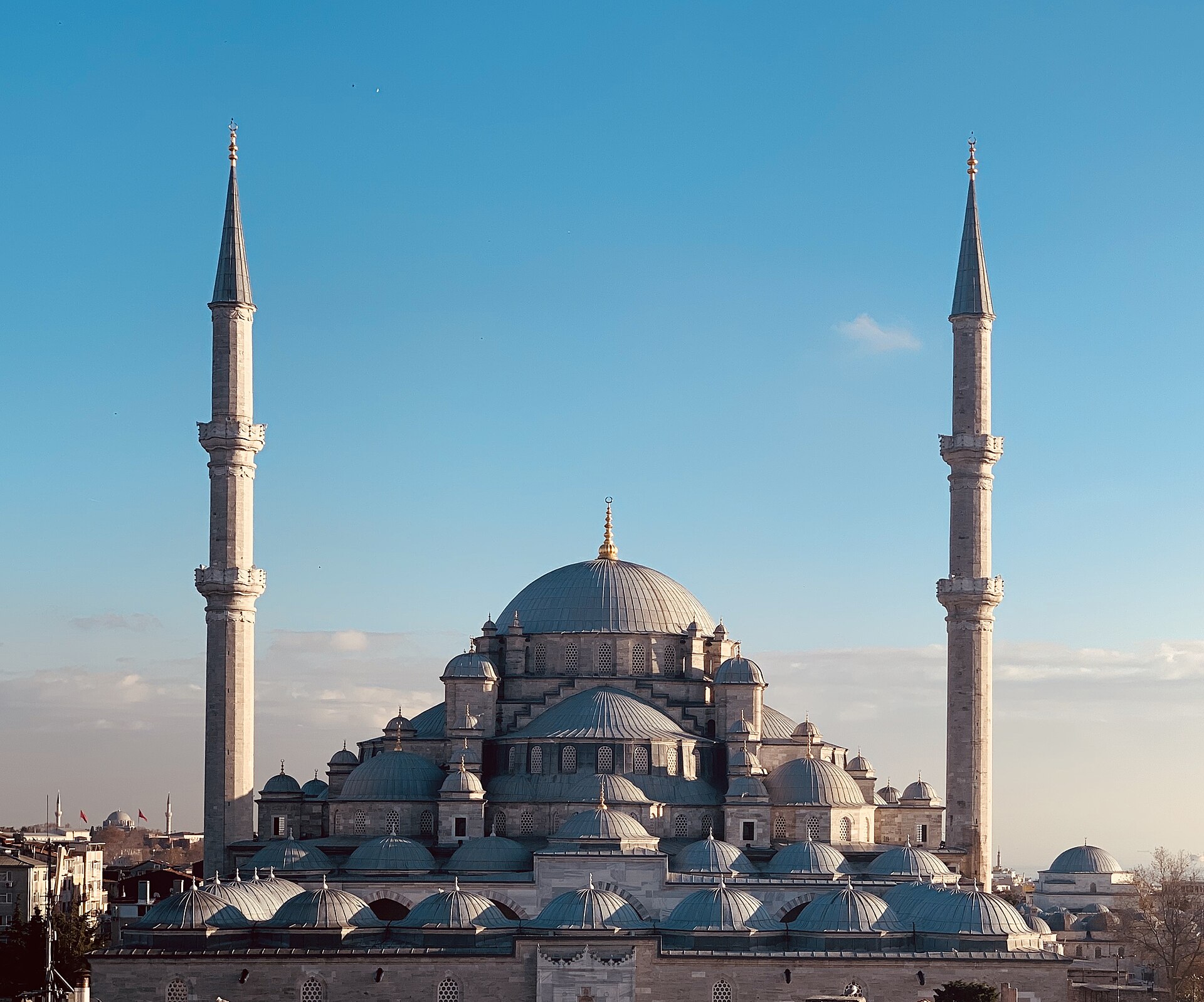
Fatih Mosque
Built on the site of the Church of the Apostles where Mehmed II was buried — Istanbul's first imperial mosque, rebuilt after an 1766 earthquake.
About
The Fatih Mosque (Fatih Camii, "Conqueror's Mosque") was the first imperial mosque built after the 1453 conquest of Constantinople, commissioned by Sultan Mehmed II on the ruins of the Byzantine Church of the Holy Apostles — the burial place of Constantine and the pre-Schism heart of Orthodox Christianity. The mosque that stands today was rebuilt in 1771 after the original 1470 structure was destroyed by an earthquake.
The current building is a much more conservative Ottoman baroque composition than the original Fatih complex (which had a famous hospital, library, and Süleyman's türbe of Mehmed, who was buried here as he wished). The interior has the standard plan of a large imperial mosque but is more austere than the Süleymaniye or Blue Mosque.
Most visitors come for two things: the tombs of Sultan Mehmed II and his wife Gülbahar (in the cemetery garden at the southwest corner of the complex), and the panoramic view from the hill. The mosque stands on Istanbul's Fourth Hill, at the intersection of the historic peninsula's main north-south axis (Divanyolu) and the hilltop that became the heart of Ottoman Istanbul.
Free entry. Closed during prayer times. Combine with a stop at the Yavuz Selim Mosque (further up the hill), which has the best terrace views of the Golden Horn in the city.
Photo credits
- fatih-mosque-hero.jpg by Sailko (Wikimedia Commons, CC BY-SA 3.0)